
Excellence in Industrial Bookbinding

Innovation and Tradition in Industrial Bookbinding
Industrial bookbinding represents a crucial sector in the editorial and printing industry. Gruppo Padovana is at the forefront of this field, offering advanced and customized solutions to meet the needs of a wide range of clients, from small printing houses to large-volume publishers.
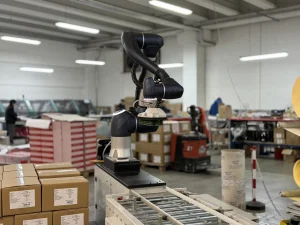
What is Automated Bookbinding?
It is the process of binding books, magazines, catalogs, and other printed materials using advanced technologies to ensure high quality and durability. This process includes several phases such as folding, sewing, gluing, casing-in, and finishing. Thanks to the use of automated machinery, industrial binding is capable of managing large production volumes in rapid timeframes.
Phases of Mechanized Bookbinding
- Folding: The printed pages are precisely folded to form the signatures—a defined number of pages consisting of a single large sheet.
- Sewing: The signatures are sewn together using various techniques, such as thread sewing, which guarantees greater strength.
- Gluing: The pages are glued to the spine, using different types of adhesives that ensure long-lasting durability.
- Casing-in: A cover with a cardboard core is applied if the job is a hard cover, which can be customized with various materials and finishes.
- Finishing: This includes processes such as lamination, hot foil stamping, and cellophane wrapping that improve the aesthetic appearance and functionality of the finished product.

Differences Between Large-Scale Binding and Sampling:
Here are some of the main differences between industrial binding and the sampling done prior to the print run:
- Production Volume: Industrial binding is ideal for the production of large volumes, whereas sampling is adopted to simulate the industrial process but without the aid of the same machinery, as setup times in industrial processes have a high impact the smaller the volume of pieces.
- Execution Time: Thanks to automated machinery, industrial binding can complete large quantities of work in much shorter times compared to manual binding, where complexity and variables make time estimation difficult.
- Precision and Measurements: Despite our commitment to ensuring maximum precision, some differences may occur between the sample and the final delivered volume. These variations can depend on:
- Differences in the machines used, which exert varying pressures.
- The influence of ink, which on large volumes of pages can slightly alter the overall thickness of the book block.
- Manual production of the sample, which makes each copy unique and subject to slight variations.
Gruppo Padovana is always available to provide clarification and collaborate to ensure the final result aligns with our clients’ expectations.
Request a consultation or a sample here!


